Contractor Pollution Liability for Sandblasting: What It Covers and Why You Need It
By Josh Cotner
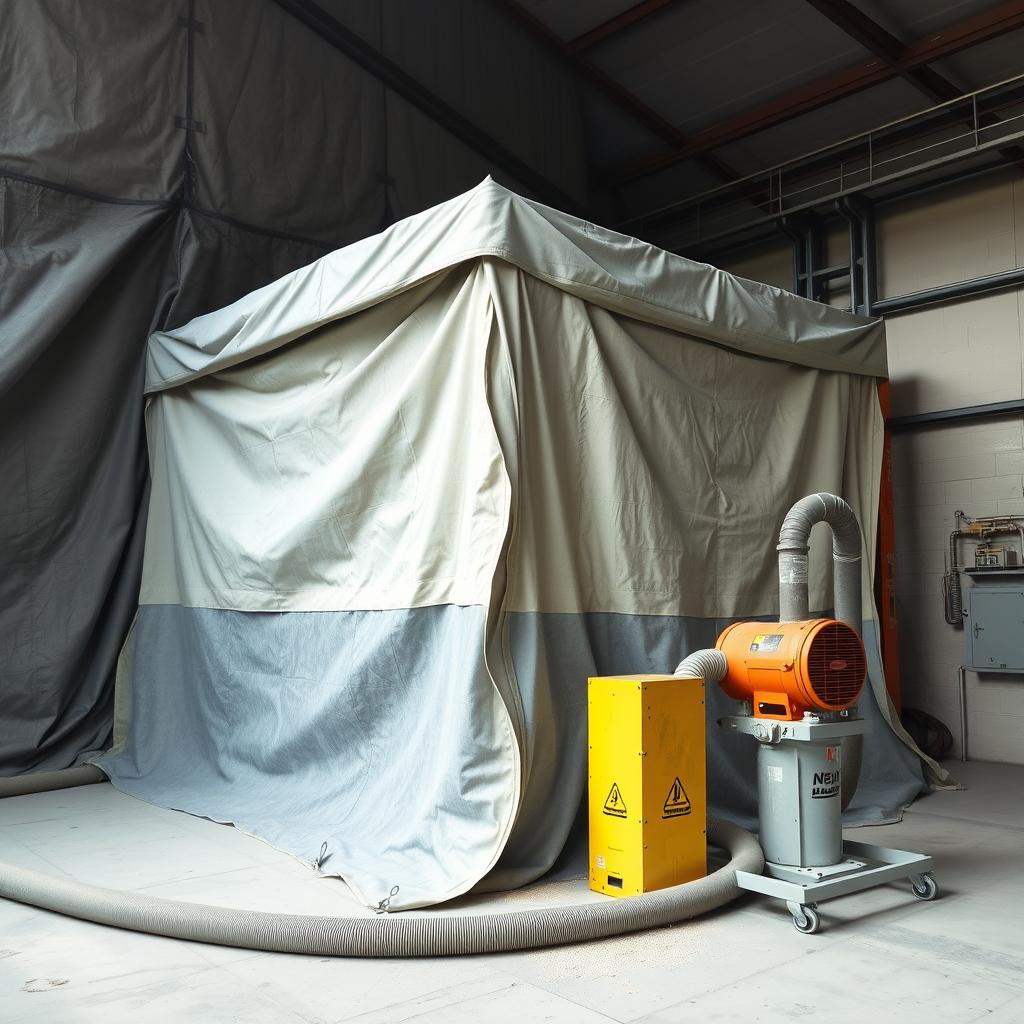
Contractor pollution liability (CPL) is the insurance coverage that most sandblasting contractors don't have — and the one they most need.
This isn't about being careless with environmental compliance. It's about the structure of standard general liability policies and what they deliberately exclude.
The pollution exclusion — and what it means for sandblasting
Every standard commercial general liability (CGL) policy includes a pollution exclusion. In its most common form, it looks something like this:
"This insurance does not apply to bodily injury or property damage arising out of the actual, alleged or threatened discharge, dispersal, seepage, migration, release or escape of pollutants..."
The word "pollutants" is defined broadly to include gases, liquids, and solids — including particulate matter, contaminants, and irritants.
For sandblasting contractors, here's the problem: your core work activity generates fine particulate matter that qualifies as a pollutant under this definition. Silica dust from blasting concrete or masonry, lead paint particles from stripping old coatings, abrasive media itself (especially spent media that contains heavy metals from the substrate) — all of these can fall under the pollution exclusion.
When a neighboring property owner claims bodily injury from silica dust exposure, or a building owner claims property damage from blast media that escaped containment, your GL carrier has a ready-made defense: the pollution exclusion. The claim gets denied. You're personally exposed.
What CPL covers
Contractor pollution liability is a separate policy (or endorsement) that specifically covers what GL's pollution exclusion leaves out. For sandblasting contractors, a well-structured CPL policy covers:
Third-party bodily injury from pollution incidents If someone outside your crew is injured or becomes ill from exposure to silica dust, lead paint particles, or other contaminants from your blasting operations, CPL pays covered damages and defense costs.
Third-party property damage from pollution If blast media or contaminated dust damages neighboring property — coating surfaces, contaminating soils, damaging equipment — CPL covers the cleanup and damage costs.
Cleanup costs If blasting media or contaminated materials escape your containment and require environmental cleanup, CPL typically covers the remediation costs (subject to policy terms).
Completed operations coverage Many CPL policies extend coverage to claims that arise after the job is done — a latent exposure claim that surfaces weeks or months after you've finished the project.
Defense costs Even if the claim is ultimately resolved in your favor, the cost of defending against a contamination allegation can be substantial. CPL covers defense costs even for claims that don't result in payment.
Silica exposure and third-party bodily injury
Silicosis — the progressive, irreversible lung disease caused by inhaling crystalline silica — is a recognized occupational hazard in sandblasting. But the exposure risk isn't limited to your employees.
When fine silica dust escapes blasting containment, it can expose:
- Residents and workers in adjacent buildings or properties
- Passersby on nearby streets or walkways
- Workers on other trades at the same job site
- Property owners whose buildings become coated with silica-bearing dust
Any of these third parties could file a bodily injury claim alleging silica exposure from your operations. Without CPL, that claim hits the GL pollution exclusion and you're uninsured.
Lead paint abatement and CPL
If your sandblasting operation strips paint from older structures, you're almost certainly encountering lead-containing coatings. Buildings constructed before 1978 commonly used lead-based paint, and the sandblasting process turns those coatings into fine airborne particulate.
Lead paint abatement alongside sandblasting significantly increases the CPL risk profile because:
- Lead is a recognized toxic metal with strict regulatory limits
- The regulatory framework (EPA, OSHA, state environmental agencies) is extensive
- Cleanup requirements for lead-contaminated materials are detailed and expensive
- The potential for long-tail health claims from exposure is significant
Not all CPL carriers write lead-containing material (LCM) removal — it's a higher-risk class. We work with markets that specifically underwrite sandblasting operations involving lead paint.
The GL + CPL coordination
One important consideration: when you have both GL and CPL, claims sometimes have to be sorted between the two policies. A GL carrier may argue that a claim is pollution-related (denying it under GL); a CPL carrier may argue it's not a pollution claim (denying it under CPL).
This is why the GL and CPL should be structured together — ideally with the same carrier, or with the two policies structured to be complementary rather than adversarial. We build programs where the two policies are coordinated, so you're not caught in the gap between carriers pointing at each other.
CPL limits and retroactive dates
Two things matter when setting up CPL:
Retroactive date: Most CPL policies are claims-made policies with a retroactive date — the earliest date from which covered pollution incidents are eligible for coverage. Ideally, your CPL retroactive date matches the date your business started. Gaps in CPL coverage create uninsured retroactive exposure.
Limits: CPL limits are typically stated as per-occurrence and aggregate. For sandblasting contractors, $1M per occurrence / $2M aggregate is a starting point; larger industrial or infrastructure projects may require higher limits. Your umbrella policy can provide additional limits above CPL if needed.
Getting CPL for your sandblasting operation
CPL for sandblasting contractors requires specialist placement — not all insurance markets write abrasive blasting operations, and the ones that do often have specific underwriting requirements (loss runs, description of containment practices, work history).
We work with admitted and E&S CPL markets that specifically write sandblasting contractors and understand the silica, lead paint, and abrasive media exposure profile. Call 844-967-5247 or use our quote form to get started.
Need insurance for your sandblasting operation?
Get a real quote in about 15 minutes — GL + CPL + WC from A-rated specialty markets.