Equipment Coverage for Sandblasting Contractors: Tools & Equipment vs. Inland Marine
By Josh Cotner
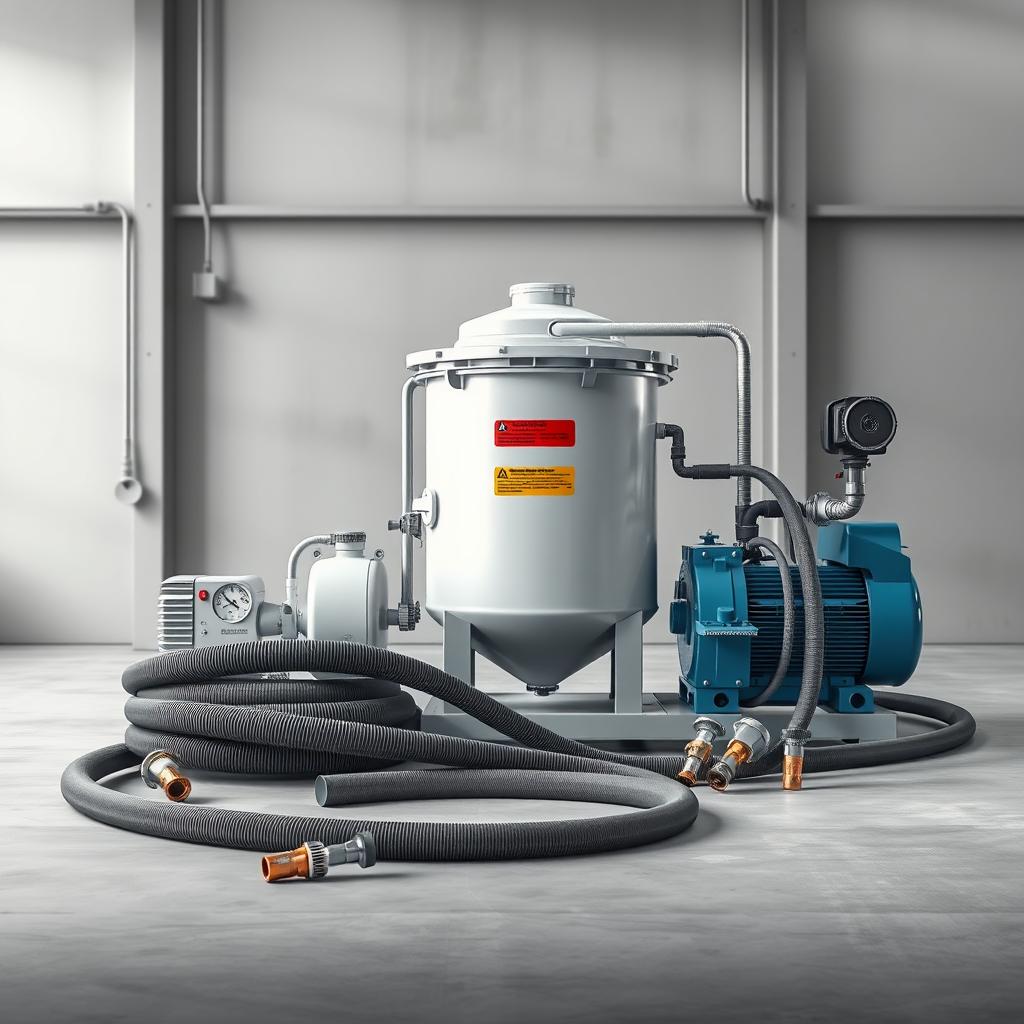
Sandblasting equipment is expensive, specialized, and hard to replace quickly. A blast pot failure or theft mid-project can shut down your operation and cost you a contract — and your commercial auto policy almost certainly doesn't cover the equipment in the back of your truck.
This guide covers the two main insurance policies that protect sandblasting equipment: tools and equipment insurance and inland marine insurance, and how they work together.
What sandblasting equipment costs to replace
Before getting into coverage, it helps to understand what's at stake:
Industrial blast pots: Large pressure vessels run $5,000 to $50,000+ depending on capacity and configuration. Portable units for smaller jobs run $2,000 to $15,000.
Air compressors: Industrial-grade compressors capable of powering a blast system run $15,000 to $100,000 or more. Towable compressor units are in the $20,000–$60,000 range.
Blasting hoses: Heavy-duty abrasive blast hoses run $10 to $20 per foot. A 200-foot hose run costs $2,000–$4,000 — and hoses wear and need regular replacement.
Nozzles: Tungsten carbide nozzles run $30 to $200 each. Ceramic nozzles are less expensive but wear faster. A well-equipped operation goes through dozens of nozzles per year.
Containment systems: Blast rooms, shroud systems, and vacuum equipment can run $10,000 to $100,000+ for large industrial operations.
Respirators: Supplied-air respirator systems for blasting operators run $500 to $2,000 per unit.
Total investment in a well-equipped sandblasting operation can easily exceed $200,000–$500,000 in equipment alone. Without proper coverage, a theft or major equipment damage event can be financially devastating.
Tools and equipment insurance
Tools and equipment (T&E) insurance covers your sandblasting equipment against:
Theft: Job-site theft of blast pots, compressors, and portable equipment is a real risk. T&E pays replacement cost (or actual cash value, depending on your policy) when equipment is stolen.
Physical damage: If a compressor is damaged in a job-site accident — a forklift collision, falling debris, equipment malfunction — T&E covers repair or replacement.
Vandalism: Intentional damage to equipment is covered.
Some breakdown: Depending on the policy, some T&E policies include equipment breakdown coverage.
What T&E typically doesn't cover:
Normal wear and tear: Worn nozzles, deteriorated hoses, and gradual component degradation aren't insured losses — they're maintenance costs.
Equipment while being transported: This is the key gap between T&E and inland marine. Standard T&E policies cover equipment "at the job site" or "in your yard." Once equipment is loaded onto your truck for transport between jobs, there may be a coverage gap.
Mechanical breakdown (in most T&E policies): Many T&E policies don't cover internal mechanical breakdown — a compressor that seizes up due to mechanical failure. Separate equipment breakdown coverage addresses this.
Inland marine insurance
Despite the name, inland marine insurance has nothing to do with water. It covers property in transit and property that moves between locations — historically, goods transported by ship or on rivers, now broadly any property in transit.
For sandblasting contractors, inland marine covers:
Equipment in transit: When your blast pot and compressor are loaded on a trailer being hauled between job sites, inland marine covers them if the trailer is in an accident, the equipment falls off during transport, or the trailer is stolen with the equipment on it.
Borrowed or rented equipment: If you rent a blast pot for a project and it's damaged while in your care, inland marine typically covers your liability for the damage.
Materials in transit: Abrasive media and surface treatment materials being delivered to job sites can be covered under inland marine.
Leased equipment: Equipment you're leasing and responsible for insuring can be covered under an inland marine policy.
How T&E and inland marine work together
Think of the coverage as a relay: inland marine covers your equipment while it's moving, and T&E covers it when it's stationary at a job site or stored at your yard.
Here's a common exposure sequence for a sandblasting contractor:
- Equipment is stored at your yard (T&E covers it)
- Equipment is loaded onto a trailer and hauled to the job site (inland marine covers it)
- Equipment is unloaded and set up at the job site (T&E covers it)
- At the end of the day, equipment is left at the job site overnight (T&E covers it)
- Equipment is loaded for transport back to the yard (inland marine covers it)
- Equipment returns to the yard (T&E covers it)
Without inland marine, there's a coverage gap every time your equipment is in transit.
Valuation: ACV vs. replacement cost
Both T&E and inland marine can be written at:
Actual Cash Value (ACV): Replacement cost minus depreciation. A 5-year-old compressor with a $40,000 replacement cost might have an ACV of $20,000. The policy pays ACV.
Replacement Cost Value (RCV): The full cost to replace the equipment with equivalent new equipment. For a 5-year-old compressor, the policy pays the current price of a new equivalent unit.
For sandblasting equipment that's actively used and well-maintained, RCV coverage is worth the additional premium. An older compressor that's functioning perfectly would be worth far less than its replacement cost under ACV — and replacing it becomes a significant out-of-pocket expense if you're paid ACV only.
Scheduling your equipment
Most T&E and inland marine policies either:
- Schedule individual pieces of equipment: List each item with its value, providing specific coverage per item
- Blanket cover all equipment up to a total limit: Cover your entire equipment inventory up to a stated maximum
For a large equipment inventory (multiple blast pots, compressors, hose systems), a blanket approach with an adequate limit is often more practical. For a few high-value items, scheduling provides cleaner coverage.
Getting equipment coverage for your sandblasting operation
Call 844-967-5247 or use our quote form. Tell us your equipment inventory — the major pieces, approximate values, and how frequently you're transporting between jobs — and we'll structure T&E and inland marine coverage that closes the gaps in your program.
Need insurance for your sandblasting operation?
Get a real quote in about 15 minutes — GL + CPL + WC from A-rated specialty markets.