Workers' Comp for Sandblasting Contractors: Class Codes, Silica Risk, and Coverage
By Josh Cotner
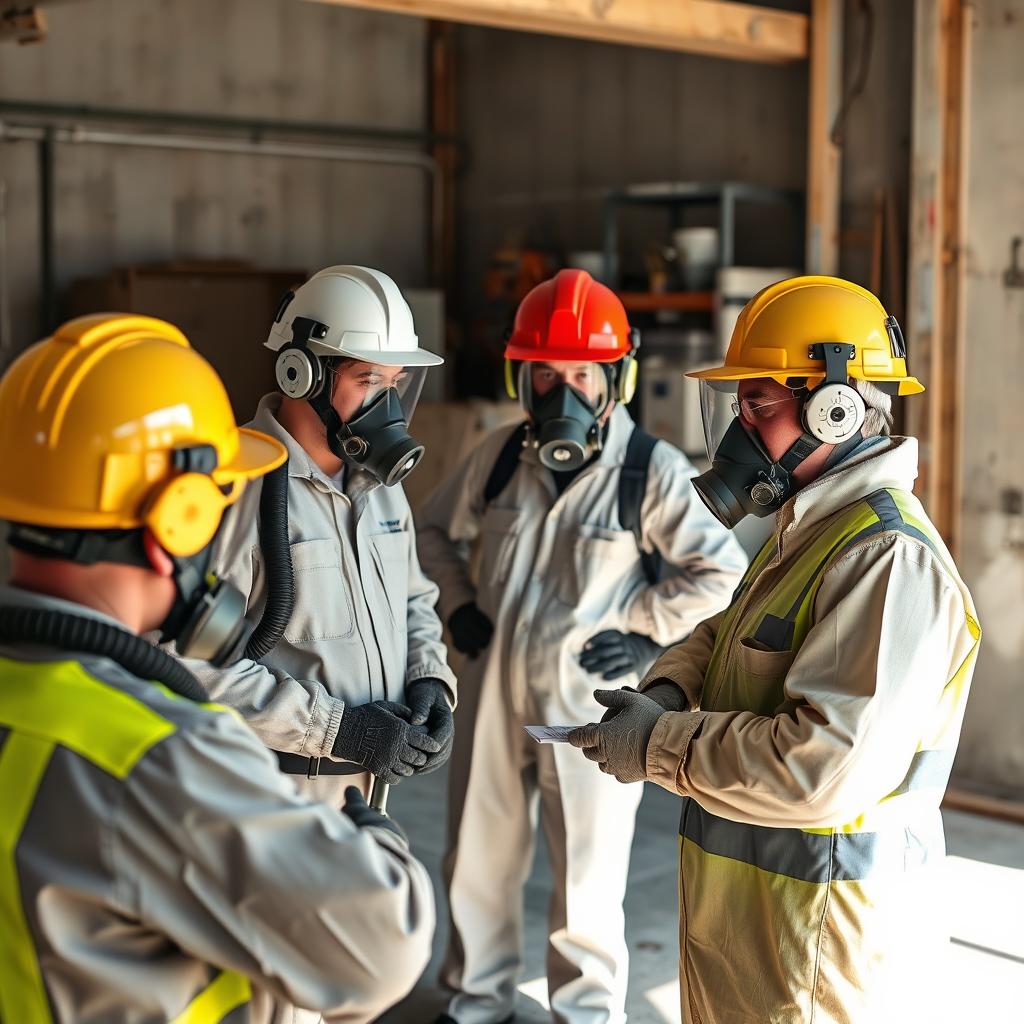
Workers' compensation for sandblasting contractors is a specialized placement. The silica dust exposure that defines the trade carries a significant occupational disease risk — silicosis — that makes sandblasting WC different from standard construction WC in important ways.
This guide covers the class codes, the silica risk, OSHA requirements, and how to make sure your WC program is structured correctly.
Why sandblasting WC needs specialist placement
Most WC markets that write standard construction trades — framing, roofing, electrical — will decline sandblasting or price it as a high-hazard trade. The reasons:
Silica exposure: Crystalline silica from abrasive blasting is the leading occupational cause of silicosis. WC actuaries know this and price abrasive blasting codes to reflect the historical occupational disease claims in the trade.
High-pressure equipment hazards: Blast pots operate at significant pressure. Equipment failures, hose whips, and pressure-related incidents can cause serious acute injuries.
Lead and chemical exposure: Contractors working on older structures encounter lead-containing coatings and other heavy metals during the blasting process.
Confined space work: Tank cleaning and interior blasting often involves confined space entry — a high-hazard work environment with its own incident pattern.
These factors combine to make sandblasting WC a specialty placement that requires carriers familiar with the trade.
WC class codes for abrasive blasting
Class codes for sandblasting contractors vary by state and carrier, but common codes include:
6217 — Sand or Gravel Digging: Sometimes used for surface sandblasting, though the fit isn't perfect for all blasting work.
5462 — Masonry: Used by some carriers for sandblasting masonry surfaces.
Industrial blasting codes: Some carriers and states have specific codes for abrasive blasting of structural steel, tank coating, and marine structures.
The critical point: your blasting crew must be classified under a code that accurately describes abrasive blasting work — not under a generic "general laborer" or "maintenance" code. Wrong codes create audit surprises when the carrier reclassifies at year-end.
OSHA silica rule requirements for sandblasting contractors
OSHA's silica standard (29 CFR 1926.1153 for construction) significantly changed the regulatory requirements for sandblasting operations. Key requirements:
Permissible Exposure Limit (PEL): 50 micrograms of respirable crystalline silica per cubic meter of air (μg/m³) as an 8-hour time-weighted average.
Action Level: 25 μg/m³ — at or above this level, enhanced controls and monitoring are required.
Table 1 specified exposure controls: For specific operations listed in OSHA's Table 1 (which includes abrasive blasting), specific engineering and work practice controls are specified that are deemed to achieve compliance.
Wet methods or LEV: Local exhaust ventilation (LEV) or wet methods to reduce silica generation.
Respiratory protection: Where engineering controls don't achieve the PEL, supplied-air respirators or other approved respiratory protection.
Exposure assessment: Periodic air monitoring to verify exposure levels.
Medical surveillance: For workers with high silica exposure (at or above the action level for 30 or more days per year), medical surveillance including baseline and periodic lung exams.
Written exposure control plan: Documentation of how you achieve OSHA silica compliance.
OSHA compliance isn't just a legal requirement — it directly affects your WC claims history and your ability to place WC coverage in the market. Carriers increasingly ask about OSHA silica compliance programs when underwriting sandblasting accounts.
Silicosis and WC claims
Silicosis is a WC occupational disease claim, not an injury claim. The distinction matters because:
- Silicosis may not manifest until years after exposure
- Claims for silicosis can span multiple policy years
- The progressive nature of the disease means medical costs continue long after diagnosis
- Death claims from silicosis are a component of the historical loss experience that drives class code rates
This is why WC carriers take sandblasting seriously as a risk. The occupational disease tail from silica exposure is real and expensive.
Preventing WC claims in sandblasting operations
Effective WC claim prevention in sandblasting focuses on:
Engineering controls first: Wet blasting methods reduce silica generation. LEV systems capture dust at the source. These are preferred over relying on respiratory protection alone.
Proper containment: Containment structures prevent blasting dust from escaping the work zone — protecting both workers and third parties (the third-party exposure falls under CPL, not WC).
PPE and respiratory protection: Where engineering controls don't achieve OSHA limits, proper supplied-air respirators are required. Full-face supplied-air respirators are standard for abrasive blasting.
Health monitoring: Baseline pulmonary function tests and periodic follow-up for workers with regular silica exposure. Early detection of silicosis allows for exposure removal before the disease progresses.
Incident reporting culture: A workplace where workers report near-misses and incidents without fear of retaliation gives you the data you need to prevent serious incidents.
Getting WC for your sandblasting operation
We place WC for sandblasting and abrasive blasting contractors in all 50 states — with the right class codes for your work type, through carriers that understand the silica and high-pressure exposure profile.
Call 844-967-5247 or use our quote form. Tell us your work type, payroll, employee count, and loss history, and we'll come back with real options.
Need insurance for your sandblasting operation?
Get a real quote in about 15 minutes — GL + CPL + WC from A-rated specialty markets.